It’s Here! Crave Bakery Cookbook in Print
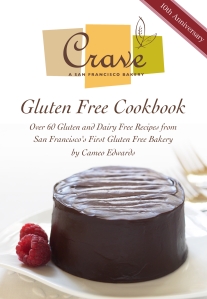
First came our iPad cookbook, then Kindle. And because so many of you asked for it, we decided it was time to offer a print version for those who prefer to hold a physical book in their rice flour covered hands! The same recipes are available in the print book as the e-books with the addition of a handy index. Lots of photos accompany the recipes so you can see the end results.
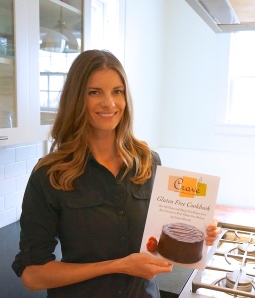
Praise for Crave Bakery’s Cookbook
We’ve gotten so many lovely reviews since the release of our initial e-book in May. The following are some compliments we’ve receive for our recipes and book:
“I loved the way Cameo organized her cookbook and recipes; it makes it super easy for readers to follow. The (Pink Velvet) cupcakes and the frosting turned out perfect, very moist and tasty.”
“The Crave cookbook is a must have for anyone who suffers or cares for someone with food allergies or gluten intolerance. The recipes are perfect for holidays, celebrations, rainy weekends, or just because. Broken down into chapters, (Cameo’s) baked goods recipes are neatly organized by levels of experience, and the pictures are scrumptious. Excluded allergens are listed clearly atop each recipe. She also adds thoughtful tips throughout the book (as well in the beginning) to help you with your baking and organization.”
Meredith Rosenblum, Plate It Safe
“With this book, it’s a snap to whip up batch after yummy batch of gluten- and dairy-free cakes, cupcakes, frostings, fillings, brownies, cookies, tarts and muffins!”
Gigi Stewart, Gluten Free Gigi
Beyond recipes, this book also includes helpful information such as:
– Wheat Flour Substitute Recipe
– Recipes organized by difficulty
– Clear allergen statements for each recipe
– Recommended Gluten Free Ingredients
– Gluten Free Baking Tips
– Decorating Tips
Printed in the USA. Get it here!
Tickets are available!
Cameo Edwards is the key speaker at the North Carolina Triangle Gluten Intolerance Fair on September 27. The fair will be held at Ganyard Farm, a gluten-free farm in Durham, NC. She will be answering questions and signing cookbooks following the presentation. Come out for some yummy gluten-free and allergy friendly food and products.

 Images courtesy Ganyard Hill Farms
We’re just delighted! We have good news! Guess what?!
Tickets to the NC Triangle Gluten Intolerance Fair are now available!
Ganyard Hill Farm, 319 Sherron Road, Durham, NC
1-6pm Saturday September 27th

This is just in time to enjoy an outdoor fun fair for the gluten-free and their families before the weather cools down and family events start rolling in… Come out, have fun, and gather more great ideas and recipes along with the harvest to share as the seasons change!
The theme this year is Live – Mind Open. This is truly imperative, as it benefits both the gluten-free and the ‘gluten unaware’ of the public. It is always better to live positively, with our minds open to what life may have in store and learn from one another!
Buy tickets for NC TGIF – North Carolina Triangle Gluten Intolerance Fair
Admission to…
View original post 737 more words
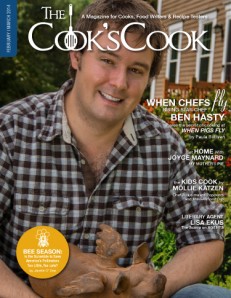
Crave’s Cake Recipe in First Issue of The Cook’s Cook
Denise Landis has been a recipe tester over 20 years for The New York Times. Because of her love for food and recipe testing, Denise started her own magazine out this month called The Cook’s Cook. You can download a copy of this first issue for free! Denise asked us to share our favorite recipes from Crave Bakery: Gluten Free Cookbook. We shared our recipes for the Mama Z’s Chocolate Cake and our Chocolate Glaze, both gluten-free and dairy-free. Download your copy today for lots of recipes and tips for food lovers, writers and recipe testers.
Gluten-Free, Dairy-Free Holiday Sugar Cookie Recipe
Holiday Sugar Cookie Recipe
Gluten-Free , Dairy-Free, Soy-Free, Nut-Free, Corn-Free
An easy recipe for gluten and dairy-free sugar cookies. Substitute butter for shortening if you prefer. For simple decoration, you can use egg white before baking to stick glitter or sprinkles to the cookie’s surface.

Ingredients
- 1 cup Sugar (210 g)
- 1 cup Palm Shortening [or Unsalted Butter if you prefer] (226 g)
- 1 Egg
- 1 1/2 tsp. Vanilla
- 1/2 tsp. Salt (you may want to reduce to 1/4 tsp. Salt if you use Butter instead of Shortening)
- 1/4 tsp. Cinnamon
- 1 cup Sweet Rice Flour (159 g)
- 2/3 cup + 2 tsp. Potato Starch (136 g)
- 1/2 cup Tapioca Flour (28 g)
- 1 tsp. Xanthan Gum
- Egg white and sprinkles/glitter (for decorating)
Let’s Get Baking
- In a large bowl, cream Shortening (or Butter) and Sugar on medium speed about one minute until combined. Scrape bowl if necessary.
- Add Egg and Vanilla, mix on medium speed. Scrape bowl if necessary.
- Combine Salt, Cinnamon, Xanthan Gum and Flours in a separate bowl. Whisk or sift to remove lumps.
- Add Salt, Cinnamon, Xanthan Gum and Flours to mixture, half at a time. Mix at a low speed until well combined.
- Cover and refrigerate for at least one hour.
- Preheat oven to 350 degrees.
- Roll out dough onto a lightly floured surface (brown rice or sweet rice flour works well), about ¼” thick.
- Cut out with cookie cutters and gently place on baking sheet. Make sure there is space in between cookies.
- Continue to reform and roll out dough until you cut all cookies.
- If you want to decorate, brush on egg white and then sprinkle with glitter/sprinkles before baking.
- Bake 10-12 minutes. Remove from oven when slightly browned. Let cookies cool five minutes on cookie sheet before transferring to a cooling rack. If decorating with frosting, cool completely before starting.
For more Crave gluten-free and allergy friendly recipes, our cookbook is available on iPad, Kindle and in print!
Cyber Monday Coupon
For Cyber Monday, receive $3 OFF today only on our print cookbook. Use promotion code H53WYCUM. Click here.
Please visit our website for more details on our cookbook, Crave recipes and company info.
Enter to Win Our Print Cookbook, Spectrum and Dream Ingredients!
Our new PRINT cookbook has just been published – Crave Bakery Gluten Free Cookbook: Over 60 Gluten and Dairy Free Recipes from San Francisco’s First Gluten Free Bakery. To celebrate the arrival of our new cookbook, we have teamed up with Spectrum® brand and Dream™ brand to give away a gluten-free baking prize package.

We are going to pick ONE winner who will receive a print copy of Crave Bakery Gluten-Free Cookbook AND One Spectrum® Palm Shortening, One Spectrum® High Heat Canola Spray, One Rice Dream® Original, One Rice Dream® Enriched- all of which we recommend in our book. We have used Rice Dream™ brand and Spectrum® brand products in our own bakery and can attest to their high quality results in recipes and focus on gluten-free and dairy-free. This ingredient prize pack will allow you to make many recipes from our cookbook. You get all five items listed below if you win- shipped directly to you!
- One Crave Bakery Gluten Free Cookbook (now in print!)
- One Spectrum® Palm Shortening
- One Spectrum® High Heat Canola Spray
- One Rice Dream® Original
- One Rice Dream® Enriched

Enter by midnight November 17, 2013. Winners will be announced on or about November 18, 2013. To enter, follow these three easy steps:
1) Click on the link below to sign up for our newsletter. Sharing your email will allow Crave to contact you if you win:


2) Follow us on at least one of our social media channels:
- Like Crave Bakery on Facebook
- Follow Crave Bakery on Twitter
- Follow Crave Bakery on Pinterest
3) Leave a comment on this blog post OR post on our Facebook page telling us what you did in Step 2.*
One winner will be selected at random and announced via our Blog, Facebook and Twitter, on or about November 18, 2013.
*If you are already a Crave Bakery fan and signed up for our newsletter, you may still enter the contest by leaving a comment on this blog post or Facebook page stating so.
To read the full list of Official Sweepstakes Rules, please click here.
Gluten Free Baking Tip of the Day – Clean Slice
Daily tips for your gluten free baking adventure!
Today’s Tip:
-
When slicing your cakes to serve, heat a knife under a stream of very hot water. Dry the knife which will still be hot. The knife will then easily slide through the cake and give you nice, clean cuts. Especially important for getting pretty slices at your big event!


For more info about Crave, visit our website.
Lots more Gluten Free Baking Tips in our 10th Anniversary cookbook: Crave Bakery Gluten Free Cookbook. Now available for your iPad or your Kindle.
Gluten Free Baking Tip of the Day – Be Conservative with Gums
Daily tips for your gluten free baking adventure!
Today’s Tip:
-
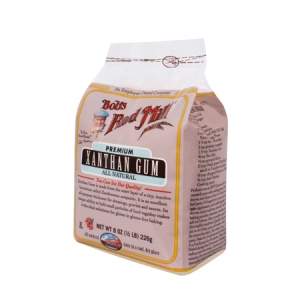
Don’t be heavy handed with your gums (xanthan or guar). This is the mistake lots of people make to ensure that gluten-free items hold together. The result will be a gummy, mass produced texture.
For more info about Crave, visit our website.
Lots more Gluten Free Baking Tips in our 10th Anniversary cookbook: Crave Bakery Gluten Free Cookbook. Now available for your iPad or your Kindle.
Gluten Free Baking Tip of the Day – Removing Cupcake Papers
Daily tips for your gluten free baking adventure!
Today’s Tip:
-
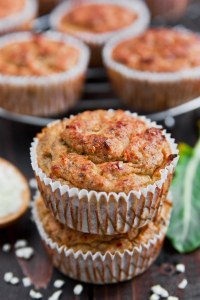
As tempting as it is, don’t try to remove papers while your muffin or cupcake is still warm, as the cake will most likely stick. WAIT, until it’s completely cool unless you don’t mind eating the cake off the paper!

For more info about Crave, visit our website.
Lots more Gluten Free Baking Tips in our 10th Anniversary cookbook: Crave Bakery Gluten Free Cookbook. Now available for your iPad or your Kindle.
Gluten Free Baking Tip of the Day – Potato Starch
Daily tips for your gluten free baking adventure!
Today’s Tip:
-
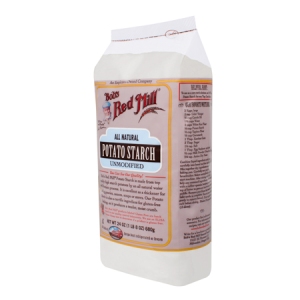
Potato Starch is used in quite a few of our gluten free recipes. Potato Starch and Potato Flour are very different. Potato Flour tastes a lot like potatoes. Potato starch is mild. You will know the difference because the starch is very fine and the flour is more granular.

For more info about Crave, visit our website.
Lots more Gluten Free Baking Tips in our 10th Anniversary cookbook Crave Bakery Gluten Free Cookbook. Now available for your iPad or your Kindle.

 Crave Bakery- Gluten Free Blog